
The Data Are Getting Clearer: Dr. Luke Allen on Adolescent Gender Affirming Care and Mental Health
Mar 02, 2026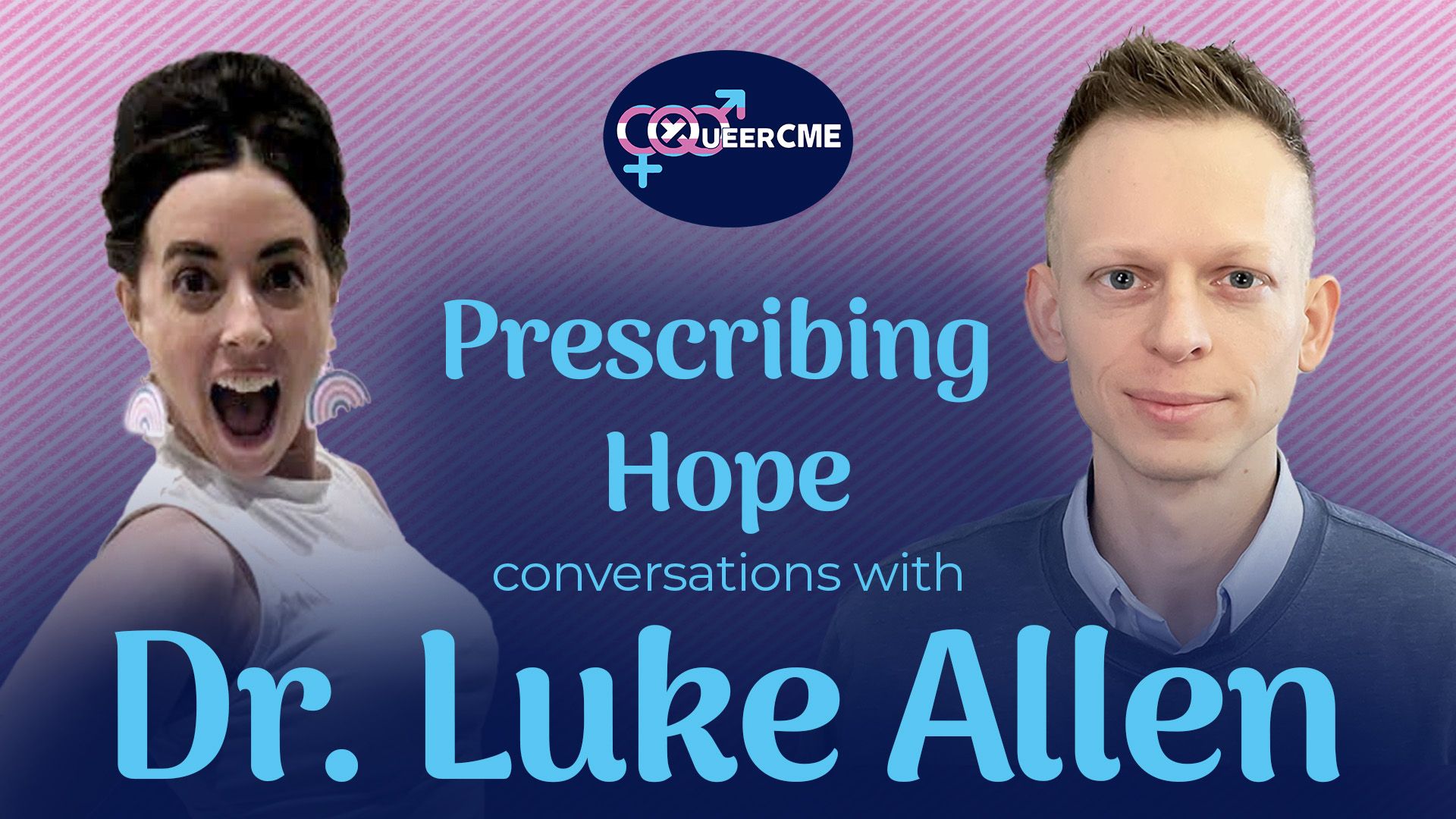
In our recent podcast conversation, Dr. Luke Allen — a psychologist and researcher — walked us through findings from his recent paper examining mental health outcomes among adolescents receiving gender affirming care.
The takeaway is not dramatic. It is not sensational.
It is steady.
And it adds to a growing body of literature showing that access to gender affirming medical care in adolescence is associated with reductions in depression and suicidal behaviors.
That matters.
Because much of the public discourse still frames adolescent gender affirming care as reckless, experimental, or harmful to mental health. Luke’s work does something quieter but more powerful: it adds data.
Expanding the Evidence Base
Adolescent gender affirming care has long been guided by clinical frameworks outlined by the 2017 Endocrine Society Clinical Practice Guideline and reinforced in the 2022 World Professional Association for Transgender Health Standards of Care Version 8 . Both documents support puberty suppression and, when appropriate, gender affirming hormones.
What Luke’s paper contributes is outcome data — specifically in the domain most often weaponized in political debates: mental health.
Across multiple studies in recent years, access to puberty blockers and gender affirming hormones has been associated with:
-
Decreased depressive symptoms
-
Lower suicidal ideation
-
Reduced suicide attempts
-
Improved overall psychological functioning
Luke’s research adds to that pattern. It does not stand alone. It strengthens a signal already present in the literature.
For clinicians, that accumulation matters more than any single study.
Shifting the Narrative from Speculation to Outcomes
One of the tensions Luke named in our conversation is that public debate often centers hypothetical regret or long-term uncertainty while minimizing present-day distress.
As psychologists and prescribers alike know, untreated gender dysphoria in adolescence is not benign. Rates of depression, anxiety, and suicidality among trans and gender diverse youth are well documented.
The question is not whether these youth experience distress.
The question is whether evidence-based intervention helps.
The data increasingly suggest that it does.
Luke’s work reinforces that when adolescents receive gender affirming medical care, their mental health outcomes improve. That does not mean every symptom disappears. It does mean that care is associated with measurable reduction in some of the most dangerous outcomes — including suicidal behaviors.
In clinical ethics, that is not a small finding.
The Importance of Psychological Research in Medical Debates
Because Dr. Allen is a psychologist, his work occupies an important space. Much of the policy debate focuses narrowly on endocrinology — on hormone levels, bone density, and fertility. Those matter.
But when legislation claims to “protect mental health” by restricting care, psychological outcome data become central.
Luke’s paper contributes to a growing international dataset showing that access to care correlates with improved mental health trajectories, not deterioration.
For clinicians, this should recalibrate how we discuss risk.
Risk is not one-sided. The risk of providing care must be weighed against the risk of withholding it. When depression and suicidal behaviors decrease following gender affirming treatment, that risk calculation changes.
Why This Matters Right Now
In an era where adolescent gender affirming care is being scrutinized, restricted, or misrepresented, the responsible response is not rhetoric. It is evidence.
The Endocrine Society guideline outlines structured criteria and monitoring for adolescent treatment . The SOC-8 reinforces individualized care and informed decision-making. Luke’s paper adds outcome data suggesting that care is associated with improved mental health.
That is what evidence-based practice looks like: guidelines informed by physiology, reinforced by outcome research, and continually updated as new data emerge.
We should not overstate what the data show. We should not promise universal outcomes. But we also should not ignore consistent signals because they are politically inconvenient.
As clinicians, our responsibility is to stay literate in the literature.
Dr. Allen’s work helps make the picture clearer.
Adolescent gender affirming care is not a mental health threat.
Increasingly, the data suggest it is part of the solution.
SUBSCRIBE FOR MONTHLY UPDATES
QueerCME distriputes a monthly newsletter which details our content updates. We also offer free live stream didactic sessions on topics in gender affirming healthcare, so we send out reminders around those as well.
We hate SPAM. We will never sell your information, for any reason.
